


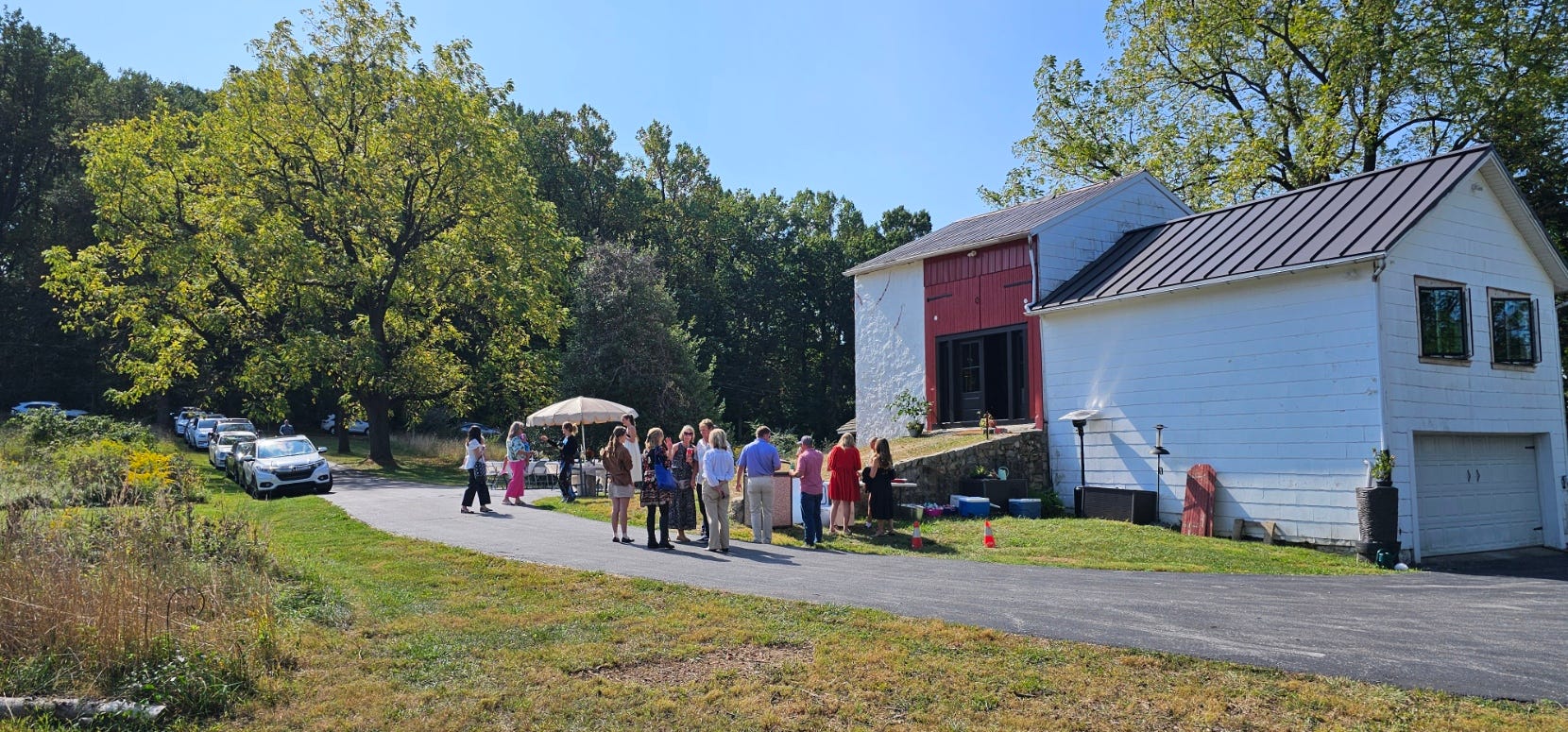
If you’ve spent time with us — walked our trails, come to a gallery opening, or joined a Pollin-teers workday — you know Longview Farm as a working conservation property in Chester Springs. What you may not know, is that Longview Farm is an initiative of inWorks LLC, an enterprise informational technology (IT) company started by Ilya Lehrman in 2010.
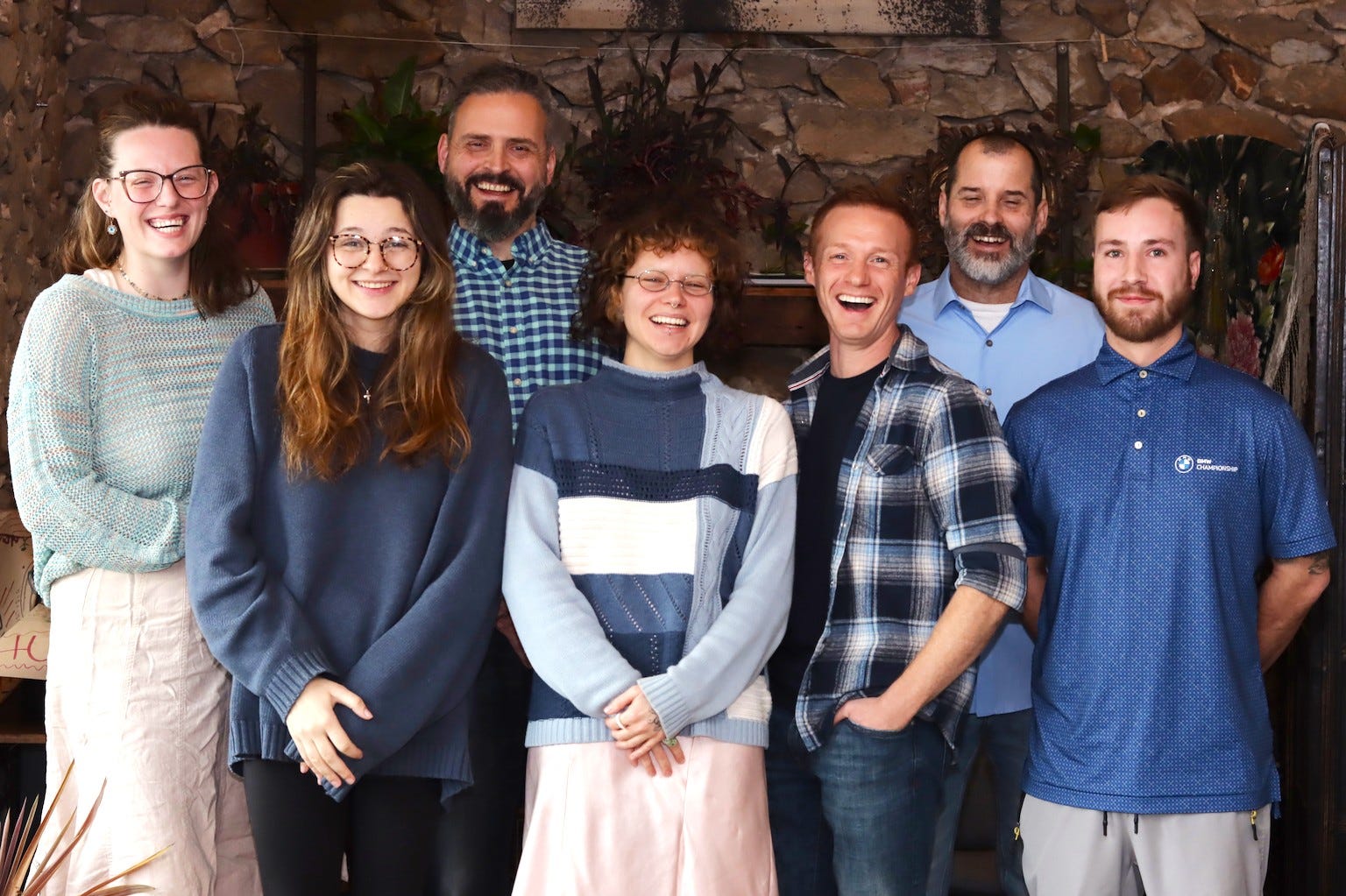
For the past 16 years, inWorks LLC has supported the growth of local and national businesses, creative small businesses owners and artists, as well as the gallery and land at the farm that you know and love. Ilya founded inWorks LLC during a fundamental shift in the IT landscape; from wires in a service board to cloud technology. We are seeing that same shift happening now from cloud technology to artificial intelligence.
inWorks LLC uses artificial intelligence actively and deliberately in its daily operations, and that work extends to what we do here at the Longview farm.
As stewards of this land and as members of the Chester County community, we are opposed to large-scale data center development in our region. We are also supportive of responsible AI use. Those two positions are not in opposition.
What is happening in our community
Across Chester County and the entire United States, proposals to build large-scale data centers are generating significant community concern. In Downingtown and nearby municipalities, residents are showing up to meetings. Planning coalitions are fracturing. The conversation is loud and, in places, contentious.
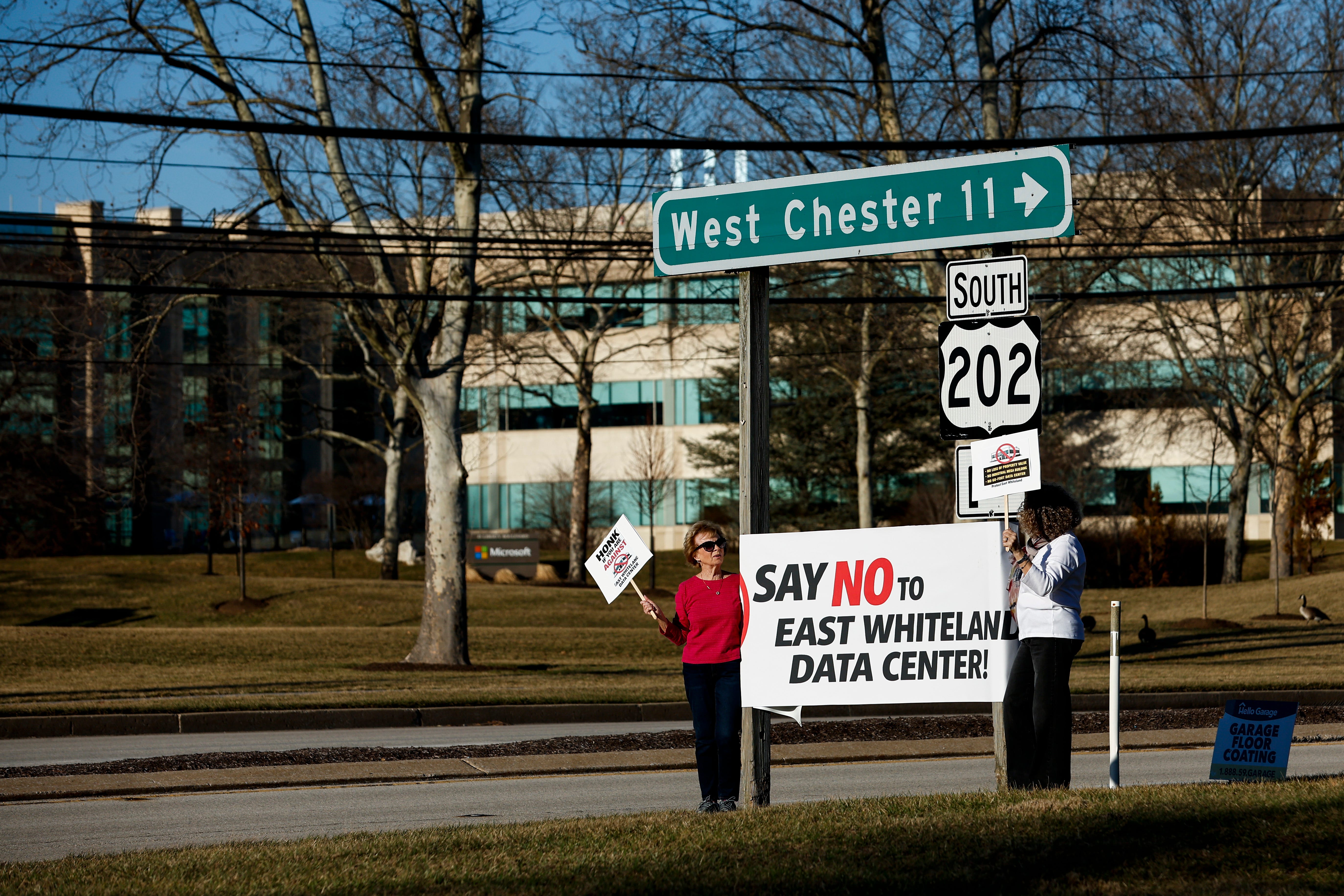
If you live in this area, you have almost certainly heard about it. Local outlets like the West Chester Chronicle have been documenting the community response as it unfolds, and NBC Philadelphia has covered resident concerns about the proposed AI data center project in our region. The Chester County Planning Commission is maintaining a public resource on how these proposals are being evaluated at the county level, and Spotlight PA has been tracking the statewide legislative and environmental debate.
As people with a stake in this land and this community, and as an organization backed by 16 years of technology expertise, we believe we have a responsibility to say something with our unique perspective.We do not subscribe to anti-technology sentiments. But there is an important conversation to be had about how technology’s impact, and its benefit, get distributed — and who gets to decide.
Where we stand on AI
Longview Farm uses artificial intelligence in our work. We use it for operations, communications, land management planning, and organizational development. We have a Responsible AI use policy at inWorks LLC that we use when managing Longview Farm. We believe responsible AI adoption is required for organizations that want to operate with integrity.
We are not anti-AI but we are pro-accountability. Technology itself is not a problem. AI, like any significant technological development, is an evolution — one with enormous potential to support conservation work, environmental research, and community resilience when applied thoughtfully. What concerns us is not the existence of the technology, but the infrastructure built to support it at scale, and the systems — or absence of systems — governing who bears its costs.
The data center conversation that we should be having
Data centers have become a focal point for anti-AI sentiment in our region. We understand why, and we believe this framing misses the deeper problem and risks misdirecting public energy away from the harder conversations that actually need to happen.
The questions worth asking are not simply “should data centers exist?” They are:
How do we distribute the costs and rewards of large-scale technology infrastructure across communities equitably?
The communities defeating data center proposals right now are the ones with the wealth, open land, and political organization to win those fights. Those projects then move toward communities with less of all three. The cost of data center growth lands hardest on people who already had the fewest tools to negotiate what gets built nearby. Who will stand up for them?
What does responsible land use look like in a county where open space is a shrinking commodity, conservation interests compete with housing needs, and large industrial footprints require decisions that cannot be undone?
How do existing regional planning structures — many of which were not designed for this scale of infrastructure — adapt in a way that preserves community voice rather than allowing it to be bypassed?
Historically, the communities that absorb industrial impact are not the same communities that capture commercial benefits. We should be careful not to build a system that privatizes the financial upside of AI infrastructure while socializing the environmental, utility, land-use, and community costs.
Our specific concerns
We are paying attention to the proposals currently being considered in Chester County, and to the broader pattern they represent. Specifically:
Zoning processes that allow industrial-scale infrastructure to be approved without conditional use review — particularly in or near residential areas — reduce the meaningful participation of the people most affected.
The fragmentation of regional planning coalitions in response to these pressures, rather than their strengthening, leaves individual municipalities more vulnerable to development they cannot manage alone.
Water and energy consumption at data center scale, in a region already navigating drought conditions and energy price instability, deserves honest public accounting.
We are calling for:
Zoning and land use decisions at this scale should include mandatory community impact review, with meaningful participation from residents, not just procedural compliance.
Regional planning structures should be strengthened, not abandoned, when difficult infrastructure decisions arise. A coalition that dissolves under pressure cannot protect the communities it was built to serve.
AI use — by organizations and the infrastructure that supports it — should be governed. That means internal policies, public accountability, and honest disclosure of environmental footprints.
The conversation about where data centers are built, and who absorbs their impact, must explicitly address environmental justice.
Our commitment
Longview Farm intends to participate in regional conversations about AI infrastructure, land use, and resource governance as advocates for the kind of stewardship that makes this land and this community worth protecting. We will continue to use AI in our own operations, responsibly and transparently. We will continue to hold ourselves to the same standard of accountability we are asking of others. And we will continue to show up to the conversations that matter, even when they are uncomfortable.
Follow the conversation
If you want to understand what’s happening in Chester County and Pennsylvania around data centers and AI infrastructure, these are the sources we’re paying attention to:
West Chester Chronicle — local coverage of the community response to data center proposals in our area. If you follow one source on this, we’d recommend theirs.
Chester County Planning Commission — Data Centers resource page — the county’s own public resource explaining how data center proposals are being evaluated, what the zoning considerations are, and where the process currently stands.
NBC Philadelphia — coverage of resident concerns over a proposed AI data center — regional broadcast coverage of Chester County residents pushing back on a specific proposal.
Spotlight PA — statewide reporting on the data center debate — coverage of how the legislature and state agencies are handling the environmental and infrastructure questions.
This is an ongoing area of coverage for Longview Farm. If you want to follow how this unfolds in Chester County — the meetings, the proposals, the decisions, and what stewardship looks like in practice — subscribe below. We’ll keep writing.