


Last weekend, six volunteers spent two mornings at Longview Farm spreading heavy plastic across the first of three treatment sections for our new pollinator habitat. That field is fully covered now, weighted with stones from the fieldstone border, and sitting under the summer sun doing exactly what we need it to do.
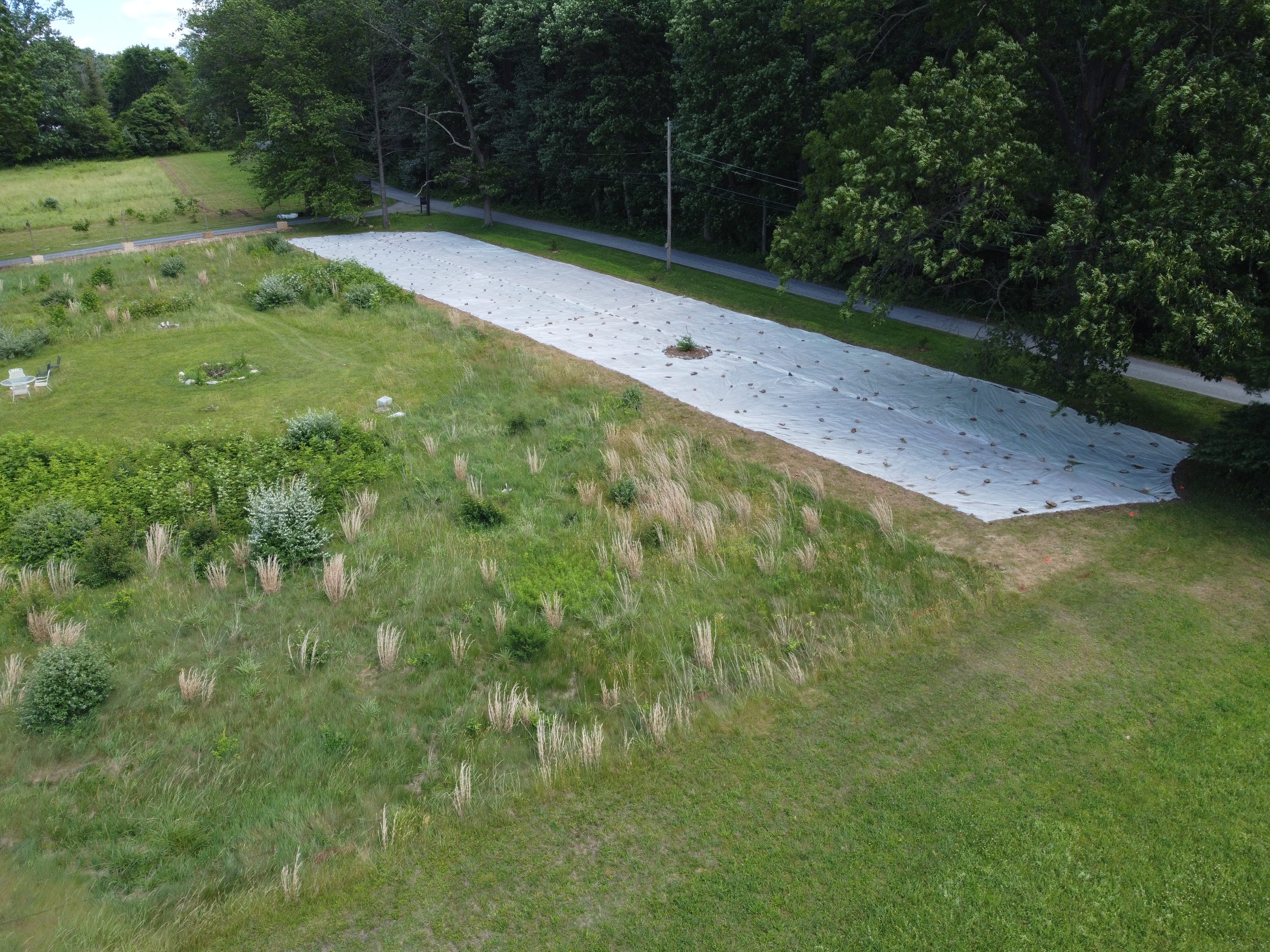
That’s one section down. We have two more to go, and we’d like your help getting them under plastic on Saturday, June 20.
What got done, what’s left
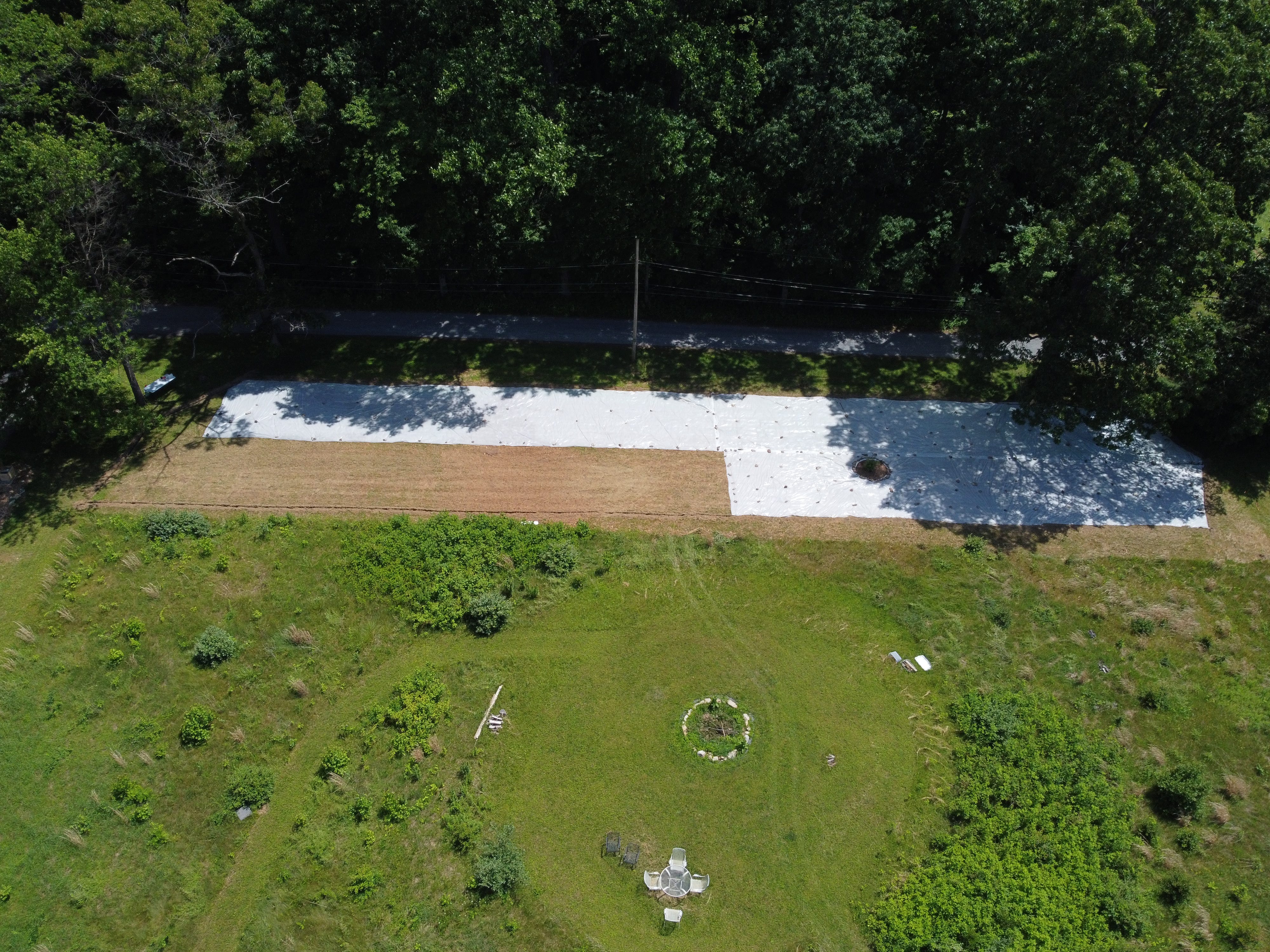
It’s physical work, and the first weekend’s crew did it well. They laid plastic across the field closest to the woodlot, hauled stones to weight the edges, and buried the perimeter so the wind couldn’t lift it. By Sunday afternoon, that field was sealed.
The other two sections, running along the field edges toward Cedar Lane, still look like they did before we started. That’s what we’re tackling Saturday.
A quick recap for anyone joining us for the first time
Longview Farm received USDA Natural Resources Conservation Service grant funding this year to establish a native pollinator habitat along the field edges of the property: a long border of wildflowers and grasses that, once established, will support bees, butterflies, birds, and the broader ecological function of a working landscape.
Before we can seed it, we have to clear what’s already growing. The most ecologically sound way to do that, at this scale, is solarization. We lay heavy plastic over the treatment areas, weigh it down, and let three or four months of summer sun do the work. In the fall, we pull the plastic and seed the pollinator mix directly into the prepared ground. The seed overwinters, germinates in spring, and the habitat takes one to two seasons of careful management before it becomes mostly self-sustaining.
So Saturday is the same work as last weekend, on the next two fields.
What to expect on Saturday, June 20
We’ll be on the property from 9:00 AM to 1:00 PM. The first 30 to 45 minutes is a safety briefing and walkthrough of the work. After that, about three hours of hands-on spreading, weighting, and burying edges, with water breaks built in. We start early to stay ahead of the afternoon heat.
Why this work matters
Federal conservation funding for projects like this isn’t something that comes around every year, and the cycle that made this project possible isn’t guaranteed to be there in the same form next time. The chance to put habitat into the ground at this scale, with this kind of technical and financial support behind it, is real right now.
If you have questions, email Jocelyn at jocelyn@inworks.llc. Otherwise, sign up below and we’ll send you what you need to know by Friday: what to wear, what to bring, where to park.